
Parapet Inspection vs. FISP (Local Law 11): What NYC Building Owners Need to Know
Local Law 126 and Local Law 11 (FISP) are two different inspection requirements with different rules and different deadlines. This article breaks down both laws side by side so you know exactly how they compare and when one inspection can cover both requirements.
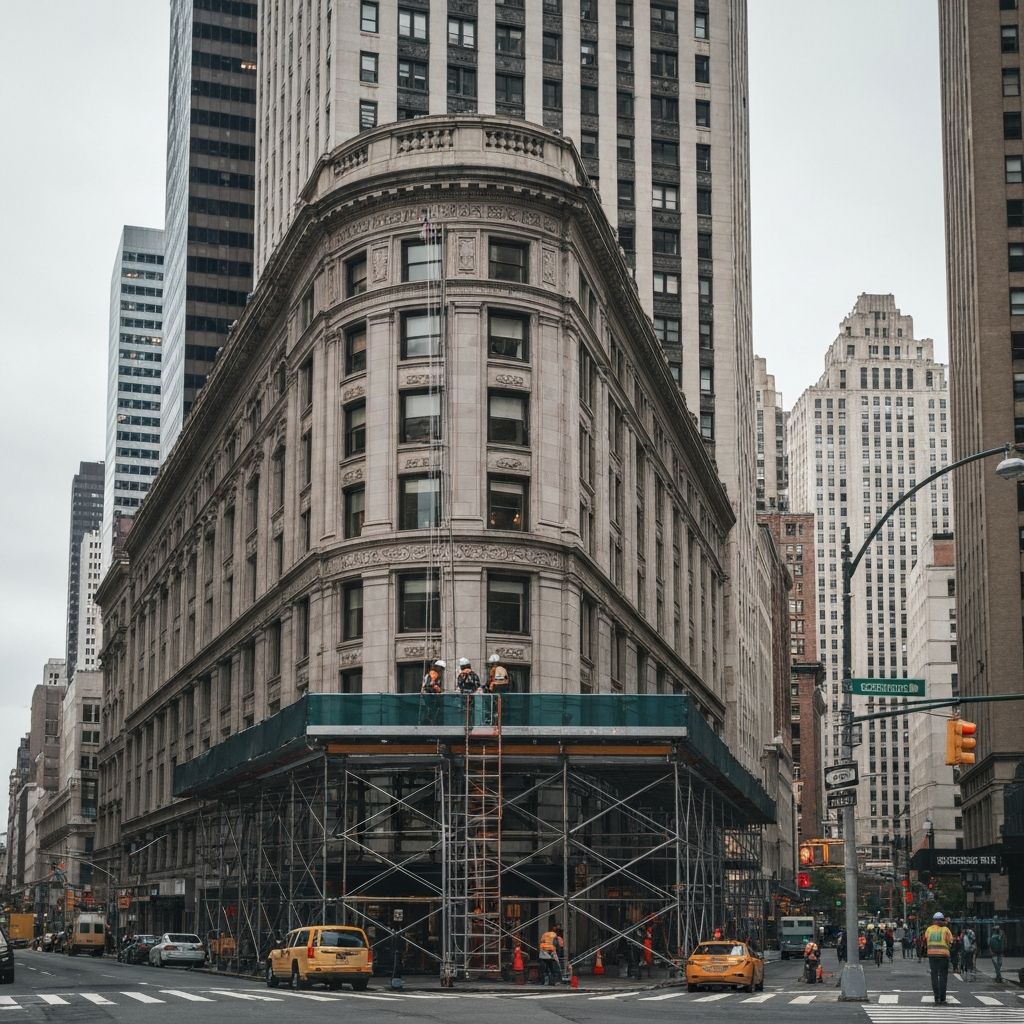
If you own or manage a building in New York City, you have probably heard of both Local Law 126 and Local Law 11 (FISP). And if you are like most building owners, you are not entirely sure how they relate to each other.
Are they the same thing? Does one replace the other? If your building already gets FISP inspections, do you still need a separate parapet inspection?
These are the questions that come up constantly. And the answers matter, because getting it wrong can mean missed inspections, unnecessary costs, or DOB violations.
This article breaks down both laws side by side: what each one requires, which buildings fall under each, how the rules differ, and when one inspection can cover both requirements.
A Quick Overview of Each Law
Local Law 11 / FISP (Facade Inspection Safety Program)
Local Law 11 has been around since 1998. It was renamed the Facade Inspection Safety Program (FISP) in 2020, but most people in the industry still call it Local Law 11.
FISP requires buildings greater than six stories to undergo a full exterior wall and appurtenance inspection every five years. The inspection covers the entire facade of the building, not just the parapets. It must be performed by a Qualified Exterior Wall Inspector (QEWI), which means a licensed professional engineer or registered architect with specific facade inspection experience.
FISP reports are filed directly with the NYC Department of Buildings through DOB NOW Safety. Eachbuilding's facade gets classified as Safe, Safe With a Repair and Maintenance Program (SWARMP), or Unsafe.
Local Law 126 (Annual Parapet Inspections)
Local Law 126 took effect on January 1, 2024. It requires annual parapet inspections for any building with a parapet wall that faces a public street, sidewalk, or right-of-way.
Unlike FISP, Local Law 126 has no minimum building height. A three-story rowhouse with a parapet needs an annual inspection just as much as a 30-story tower.
The inspection scope is narrower than FISP. It focuses specifically on the parapets and their appurtenances, not the entire facade. And the report is kept on-site by the building owner rather than filed with the DOB.
Side-by-Side Comparison
Here is how the two laws stack up across every major dimension:
| Local Law 126 (Parapet) | FISP / Local Law 11 (Facade) | |
|---|---|---|
| Buildings covered | Any building with a parapet fronting a public right-of-way (no height minimum) | Buildings greater than 6 stories |
| Inspection frequency | Annual (every year by Dec 31) | Every 5 years (per FISP cycle) |
| Inspection scope | Parapets and parapet appurtenances only | Entire exterior wall, including parapets, balconies, fire escapes, cornices, and all appurtenances |
| Who can inspect | Person with relevant construction knowledge (PE, RA, super, mason, inspector) | QEWI: licensed PE or RA with facade experience |
| Report filing | Not filed with DOB. Kept on-site, produced upon request. | Filed with DOB through DOB NOW Safety |
| Report retention | 6 years minimum | Per DOB filing records |
| Classifications | Safe, SWARMP, or Unsafe | Safe, SWARMP, or Unsafe |
| Unsafe notification | Call 311 + email parapets@buildings.nyc.gov | File FISP3 Unsafe Notification via DOB NOW Safety |
| Remediation deadline | 90 days for unsafe conditions | Varies by FISP cycle and condition |
| Penalty for non-compliance | $1,250 to $10,000 (for not producing report) | DOB violations, fines, potential Stop Work Orders |
| Effective since | January 1, 2024 | 1998 (updated as FISP in 2020) |
Which Law Applies to Your Building?
This is where things get practical. Your building falls into one of three categories:
Category 1: Under 7 stories with a parapet facing a public area
You need: Local Law 126 only.
Your building is too short for FISP, but the parapet still needs an annual inspection and report. This is the category that Local Law 126 was specifically designed to cover. Before 2024, these buildings had no parapet inspection requirement at all.
Category 2: Over 6 stories with a parapet facing a public area
You need: Both FISP and Local Law 126 (but FISP can potentially satisfy both).
Your building falls under FISP for the full facade inspection every five years. It also falls under Local Law 126 for annual parapet inspections. However, as we will cover in the next section, your FISP report may be able to satisfy the Local Law 126 requirement in the year it is completed.
Category 3: Over 6 stories with no parapet
You need: FISP only.
If your building is taller than six stories but does not have a parapet facing a public right-of-way, you still need FISP inspections but Local Law 126 does not apply. This is uncommon in NYC (most buildings have some form of parapet), but it is possible with certain curtain wall or glass facade designs.
Can a FISP Report Satisfy Local Law 126?
Yes, but only if the FISP report specifically covers everything that Local Law 126 requires for the parapet sections.
A standard FISP inspection examines the entire building facade, which includes the parapets. But FISP reports are structured differently than Local Law 126 reports. A FISP inspector might note the general condition of the parapet as part of their overall facade assessment without including all of the specific details that Local Law 126 requires.
For a FISP report to satisfy Local Law 126, it must include:
- A specific assessment of all parapets fronting the public right-of-way
- Parapet construction details (materials, height, thickness)
- Condition of parapet appurtenances (coping, railings, fixtures)
- Dated photographs of the parapet sections
- Classification of each parapet as Safe, SWARMP, or Unsafe
- All other documentation items listed in the Local Law 126 report requirements
If your FISP report checks all those boxes: yes, it can serve as your Local Law 126 report for that year. If it does not: you still need a separate Local Law 126 parapet inspection.
The safest approach is to have a direct conversation with your FISP inspector before the inspection and ask them to make sure the parapet sections of their report meet Local Law 126 standards. Most experienced FISP inspectors are now doing this automatically, but you should not assume.
The In-Between Years Problem
Here is the scenario that trips up many building owners who think they are covered by FISP:
FISP inspections happen every five years. Local Law 126 inspections happen every year.
So in the year your FISP inspection takes place, you may be covered if the report meets LL126 standards. But what about the other four years between FISP cycles? You still need annual parapet inspections in those years.
A FISP report from 2024 does not satisfy the Local Law 126 requirement for 2025, 2026, 2027, or 2028. Each year requires its own current-year observation and report.
This is the gap that catches building owners off guard. They assume their last FISP report covers them indefinitely for parapets, but it does not. Local Law 126 requires a fresh observation every single year.
Key Differences in Inspector Requirements
One of the biggest practical differences between the two laws is who can perform the inspection.
FISP requires a QEWI:
A Qualified Exterior Wall Inspector must be a licensed professional engineer or registered architect. Beyond that, they need to demonstrate experience specifically in facade inspection. The bar is high, and FISP inspection fees reflect that.
Local Law 126 allows a broader range of inspectors:
The law specifies a "person with relevant construction knowledge." This opens the door to building superintendents, masons, licensed building inspectors, and insurance inspectors in addition to PEs and RAs.
That said, just because you can use a less credentialed inspector does not mean you should. A licensed PE or RA will produce a report with more technical depth and legal defensibility. For buildings with complex parapets, visible deterioration, or a history of issues, hiring a licensed professional for the LL126 inspection is worth the extra cost.
For a full breakdown of inspection pricing across different building types, see how much a parapet inspection costs in NYC.
Report Filing: A Critical Difference
This distinction matters more than most building owners realize.
FISP reports are filed with the DOB.
After a FISP inspection, the QEWI files the report through DOB NOW Safety. The DOB reviews it, tracks the filing, and follows up on any unsafe or SWARMP conditions. There is a structured enforcement mechanism built into the process.
Local Law 126 reports are not filed with the DOB.
You keep the report on-site. The DOB can request it during an audit or investigation, and you must be able to produce it. But there is no proactive filing step and no automated tracking by the city.
What does this mean practically? It means the DOB does not know whether you have done your parapet inspection until they come ask. Some building owners see this as a reason to skip the inspection. That is a mistake.
DOB audits for Local Law 126 compliance are increasing. Building complaints, neighborhood sweeps, and cross-referencing with other violations are all triggers that can lead to a DOB inspector showing up at your building and asking for the report. If you do not have one, the minimum fine is $1,250.
Unsafe Findings: Different Notification Processes
Both FISP and Local Law 126 require action when unsafe conditions are found. But the notification process is different.
Under FISP:
The QEWI files a FISP3 Unsafe Notification through DOB NOW Safety. The building owner must install public protection (typically a sidewalk shed or netting) and the repair timeline is managed through the FISP administrative process.
Under Local Law 126:
The inspector must notify the DOB immediately by calling 311 and emailing parapets@buildings.nyc.gov. The building owner must install public protection right away. All unsafe conditions must be repaired within 90 days of DOB notification.
For buildings subject to both laws, an unsafe parapet finding during a LL126 inspection also requires a FISP3 filing if the building falls under FISP. You are effectively dealing with two notification tracks.
Cost Comparison: What You Pay for Each
Understanding the financial difference between these two inspections helps with budgeting and planning.
FISP inspection costs (every 5 years):
- Small buildings (7-10 stories): $3,000 to $6,000
- Mid-size (10-20 stories): $5,000 to $12,000
- Large/complex (20+ stories): $10,000 to $25,000+
- Additional costs if scaffolding or swing staging is needed for close-up inspection
LL126 parapet inspection costs (annual):
- Small buildings (1-3 stories): $300 to $600
- Mid-size (4-6 stories): $500 to $1,200
- Larger buildings (7+ stories): $1,000 to $2,500
For a building that falls under both laws, the annual LL126 inspection is a modest investment compared to the FISP cycle. Think of LL126 as the ongoing maintenance check and FISP as the deep-dive assessment. Smart building owners treat the annual LL126 inspections as an early warning system. When your LL126 inspector flags deterioration in year two of your FISP cycle, you can address it proactively instead of waiting until the next FISP inspection reveals a much larger (and more expensive) problem.
How the Two Laws Work Together for Building Safety
When you look at the bigger picture, Local Law 126 and FISP actually create a layered safety system for NYC buildings.
FISP provides the deep assessment. Every five years, a qualified specialist examines your entire building exterior from top to bottom. They are looking at the full envelope: walls, windows, balconies, fire escapes, cornices, and yes, parapets. The FISP report gives you a detailed snapshot of yourbuilding's overall facade health at that point in time.
Local Law 126 fills in the gaps between those five-year cycles. Parapets sit at the top of buildings, fully exposed to rain, snow, freeze-thaw cycles, wind, and UV radiation. They deteriorate faster than most other facade elements. Waiting five years between inspections is too long for a building component that takes that kind of punishment.
Annual parapet checks catch problems in their early stages when fixes are cheap and straightforward. A cracked mortar joint spotted in year two of a FISP cycle costs a few hundred dollars to repair. That same crack, left alone for three more years, can lead to loose masonry, an unsafe classification, a sidewalk shed, and a repair bill twenty to fifty times higher.
Weather is one of the biggest drivers of parapet deterioration between inspection cycles. For more on this, read about preventing water infiltration in buildings.
Common Mistakes Building Owners Make
Assuming FISP covers everything
FISP covers a lot. But it only happens every five years, and the report may not include all the LL126-specific details. You need separate annual parapet inspections in the years between FISP cycles.
Not doing LL126 inspections because the building is 'already compliant'
A building can be fully FISP-compliant and still be in violation of Local Law 126 if it does not have a current annual parapet observation report. These are two separate legal requirements.
Using the wrong inspector for FISP
Only a QEWI can perform a FISP inspection. If you hire someone who is qualified for LL126 but not FISP-certified, that inspection will not count toward your FISP obligations.
Not asking the FISP inspector to cover LL126 requirements
If you want your FISP report to double as your LL126 report, you need to tell your inspector upfront. Do not assume they will include the LL126-specific items (parapet construction details, appurtenance inventory, dated photos) unless you ask.
Forgetting about the in-between years
This bears repeating: FISP every five years plus LL126 every year. The four years between FISP cycles still require their own parapet inspections and reports.
A Practical Approach for Buildings Under Both Laws
If your building is over six stories with parapets fronting a public area, here is a straightforward approach:
In your FISP year:
- Coordinate with your QEWI to make sure the FISP report includes all Local Law 126 report elements for the parapet sections.
- Keep a copy of the FISP report on-site as your LL126 compliance document for that year.
- File the FISP report with the DOB as normal through DOB NOW Safety.
In non-FISP years:
- Schedule a standalone Local Law 126 parapet inspection annually.
- This can be done by a PE, RA, or other qualified person.
- Keep the report on-site for six years.
- Address any SWARMP or unsafe findings promptly.
This approach keeps you compliant with both laws without paying for a full FISP-level inspection every year. The annual LL126 inspection in non-FISP years is a lighter-weight (and less expensive) process that focuses specifically on the parapets.
Frequently Asked Questions
Q: Does Local Law 126 replace FISP?
A: No. They are separate laws with different requirements. Local Law 126 does not replace, modify, or eliminate FISP obligations. If your building falls under both, you must comply with both.
Q: My building is 5 stories tall. Do I need FISP?
A: No. FISP only applies to buildings greater than six stories. But if your building has a parapet facing a public area, you do need annual inspections under Local Law 126.
Q: My building is 10 stories and we just had our FISP inspection. Do I still need a LL126 inspection this year?
A: If your FISP report includes all the parapet details required by Local Law 126, it can satisfy both requirements for this year. But next year (and every subsequent year until your next FISP cycle), you will need a separate LL126 parapet inspection.
Q: Can I use the same company for both FISP and LL126 inspections?
A: Yes. In fact, using the same company can help with consistency in reporting and condition tracking over time. Just make sure the company has QEWIs on staff for FISP work and can also handle LL126 inspections.
Q: Which inspection costs more?
A: FISP inspections are significantly more expensive because they cover the entire facade, require a QEWI, and involve DOB filing. A FISP inspection for a mid-size building can run $3,000 to $10,000 or more. An annual LL126 parapet inspection for the same building might be $800 to $1,500.
Q: What if my parapet fails under LL126 but my last FISP report said Safe?
A: Conditions change between FISP cycles. A parapet that was safe two years ago can develop problems from weather, water infiltration, or settling. That is exactly why Local Law 126 requires annual observations. An unsafe finding under LL126 triggers its own notification and remediation process, regardless of the last FISP classification.
Q: Do I need to file my LL126 report with the DOB?
A: No. LL126 reports are kept on-site and produced upon request. FISP reports are the ones that get filed with the DOB.
Timeline and Scheduling Tips for Dual-Compliance Buildings
If your building needs both inspections, smart scheduling makes the process easier and keeps costs under control.
Know your FISP cycle dates.
The DOB assigns FISP filing windows based on your block and lot number. Your property's window is public information on DOB NOW. Mark those dates and plan around them.
Schedule LL126 inspections in Q2 each year.
April through June gives you the best combination of good weather, inspector availability, and time to handle any findings before the December 31 deadline. Avoid the Q4 rush when every building owner in the city is scrambling to get inspections done.
In your FISP year, coordinate both inspections.
Talk to your FISP inspector early. Ask them to include LL126-compliant parapet documentation in their FISP report. If they cannot (some FISP firms focus only on the FISP format), schedule your standalone LL126 inspection separately.
Keep a master compliance calendar.
Track your FISP cycle, annual LL126 deadlines, and any repair timelines in one place. A building with open SWARMP conditions from a LL126 inspection should have those repairs completed well before the next annual inspection.
Use LL126 inspections to prepare for FISP.
Your annual parapet observations create a year-by-year record of conditions. When your next FISP cycle comes around, your QEWI can review those reports to understand how the parapets have evolved and focus their assessment more efficiently.
The Takeaway
Local Law 126 and FISP are not competitors. They are complementary requirements that address building safety from different angles.
FISP handles the big picture: a deep inspection of the entire facade every five years by a highly qualified specialist. Local Law 126 fills in the gaps: an annual check on the parapets to catch problems between FISP cycles and extend coverage to buildings that FISP never reached.
Know which laws apply to your building. Schedule accordingly. And when your FISP year comes around, make sure your inspector is covering the LL126 requirements at the same time.
If you manage a building that falls under both laws, start by confirming your FISP cycle dates and building your annual LL126 inspection into your operating budget. The combined cost of staying compliant with both is a fraction of what you would pay in fines, emergency repairs, and legal exposure.
Need help with your annual parapet inspection?
VetraCheck provides Local Law 126 inspections across all five NYC boroughs with licensed engineers and fast report turnaround. Whether your building falls under LL126 only or both LL126 and FISP, reach out for a quote and we will help you plan your inspection schedule.
Published February 16, 2026